
Quick Answer
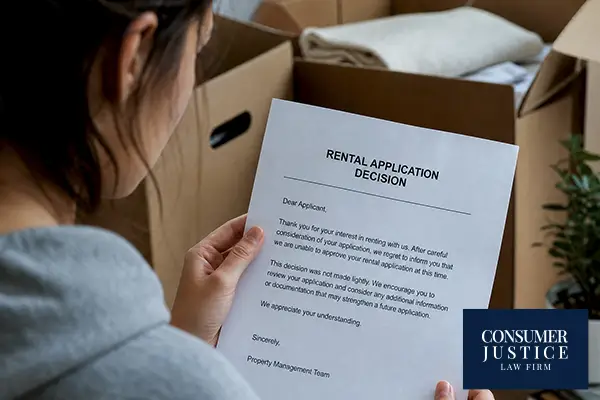
If your rental application was denied, you have the right to know when information from a tenant screening report influenced the decision, receive an adverse action notice, obtain a copy of the report, and dispute inaccurate information. You may also have protections under federal, state, or local housing laws that prohibit unlawful discrimination. If reporting errors or legal violations contributed to the denial, you may have additional legal remedies.
Why Rental Applications Get Denied
A rental application denial may happen for several reasons.
Common factors include:
- Poor credit history
- Insufficient income
- Prior evictions
- Criminal history
- Unfavorable rental references
- Information contained in a tenant screening report
Unfortunately, background check errors or tenant screening report errors can also lead to a denied apartment application, even when the applicant is qualified.
Do Landlords Have to Tell You Why You Were Denied?
Yes - if a landlord used information from a consumer reporting agency, such as a tenant screening company, to deny your application, they generally must provide an adverse action notice under the Fair Credit Reporting Act (FCRA). This notice explains that adverse information in the report contributed to the decision and identifies the screening company that supplied the report. It also informs you of your right to request a free copy of the report and dispute inaccurate information.
Your Rights Under the Fair Credit Reporting Act (FCRA)
The FCRA helps ensure that consumer reports used for housing decisions are accurate and fair.
If a landlord relies on a tenant screening report to deny your application, the FCRA gives you the right to:
- Receive an adverse action notice
- Get a free copy of the report within the required timeframe
- Dispute incorrect or incomplete information
Screening companies are required to investigate legitimate disputes and correct errors.
What to Do Immediately After a Rental Application Denial
If you receive a rental application denial, act quickly.
Request a copy of the tenant screening report if you do not already have it.
Carefully review the report for mistakes, including incorrect personal information, accounts that do not belong to you, false eviction records, or outdated criminal history.
If you identify errors, begin a tenant screening dispute as soon as possible and keep copies of all correspondence. It is recommended that disputes be handled through certified mail to create a document trail.
Contact a tenant screening report error lawyer for personalized legal guidance and feedback.
How to Spot Errors on a Tenant Screening Report
Review every section of your report carefully. Common tenant screening report errors include:
- Incorrect names or addresses
- Mixed files containing another person’s information
- Inaccurate eviction records
- Duplicate accounts
- Outdated public records
- Background check errors
Even a small mistake can affect a landlord’s decision, making it important to verify every detail.
Can You Dispute an Incorrect Tenant Screening Report?
Yes. The FCRA allows consumers to dispute incorrect information appearing on a tenant screening report.
Once you submit a tenant screening dispute, the reporting company must investigate the claim and correct or remove information that cannot be verified.
What Happens If a Tenant Screening Company Violated Your Rights?
If a tenant screening company violated your rights and failed to follow the Fair Credit Reporting Act by reporting false information, failing to investigate disputes, or not correcting verified errors - it may be held legally responsible.
Depending on the circumstances, consumers may be entitled to recover damages for financial losses, emotional distress, or other harm resulting from a wrongful rental denial.
Can You Sue for a Wrongful Rental Application Denial?
Potentially. A wrongful rental denial may give rise to legal claims if inaccurate consumer reporting, FCRA violations, or discrimination contributed to the decision.
While not every denied apartment application results in a lawsuit, individuals harmed by reporting errors or unlawful practices may have legal options.
If tenant screening report errors lead to the wrongful denial, a consumer protection attorney can evaluate whether the facts support an FCRA violation claim. If you suspect discrimination, a civil rights attorney can provide insight.
When to Contact a Consumer Protection Attorney
Consider contacting a consumer protection attorney if you believe tenant screening report errors caused your rental application denial, your dispute was ignored, or your rights under the Fair Credit Reporting Act were violated.
An attorney can review your reports, explain your legal options, prepare disputes, file lawsuits, and determine whether you may be entitled to compensation.
Frequently Asked Questions About Rental Application Denials
Can I get a copy of the report used to deny my rental application?
Yes. If your application was denied based on a tenant screening report, you generally have the right to request a free copy of the report after receiving an adverse action notice.
How long do I have to dispute a tenant screening error?
You should dispute errors as soon as possible after discovering them. Prompt action helps prevent inaccurate information from affecting future housing opportunities.
Can a landlord deny me because of my credit score?
Yes. Landlords may consider credit history when evaluating applicants, provided they comply with applicable federal, state, and local laws. If credit information contributed to the denial, you should receive an adverse action notice when required.
What if someone else’s information appears on my report?
You should immediately file a tenant screening dispute and provide documentation showing the information does not belong to you. Mixed-file errors can significantly impact rental decisions.
Can I recover compensation for a tenant screening error?
Yes. If tenant screening report errors or violations of the FCRA caused measurable harm, you may be eligible to recover damages depending on the facts of your case.
What is an adverse action notice?
An adverse action notice is a written notice informing you that information from a consumer report contributed to a negative decision, such as a rental application denial. It also explains your rights to obtain a copy of the report and dispute incorrect information.
Know Your Rights and Take Action After a Rental Denial
A rental application denial does not always mean the information used against you was accurate.
Reviewing your tenant screening report, identifying background check errors, and exercising your rights under the FCRA can help you enforce your right to accurate reporting and protect future housing opportunities.
If reporting errors contributed to a wrongful rental denial, understanding your legal options is an important step toward protecting your rights.