
Key Takeaways
- Debt collection harassment occurs when a debt collector uses abusive, deceptive, unfair, or unlawful collection tactics.
- The FDCPA limits how often, when, and how debt collectors may contact you.
- Repeated calls, threats, abusive language, and false statements violate federal law.
- You have the right to request debt validation, dispute debts, and limit certain communications.
- Documentation is critical because call logs, voicemails, texts, emails, and letters may support a legal claim.
- If a debt collector violates your rights, a debt collection harassment lawyer helps you get compensation and corrections under federal law.
What Counts as Debt Collection Harassment?
Debt collection is legal, but under the Fair Debt Collection Practices Act (FDCPA), debt collectors are not legally allowed to engage in any form of debt collection harassment.
Unlawful debt collection tactics are intended to cause chaos in your daily existence, embarrass you, damage your reputation, negatively impact your stress levels and mental health, and destroy your resolve to question the legitimacy of the debt, your obligation to pay, or the things they tell you. So, where is the line drawn?
The general categories of unlawful debt collection practices:
- Bad practices: collecting a real debt, but doing it in a way that causes mental, emotional, reputational, professional, or financial harm to you
- Not accurate: collecting a debt that isn’t yours, isn’t real, or is based on a data reporting error at a financial company (like the type of errors that happen when your data gets mixed with someone else’s)
- No right to collect: collecting a debt they have no right to collect, such as medical bills related to covered workers comp or Medicaid care
If you’ve experienced any of these situations, or something similar, you should speak with a debt collection lawyer about the specific facts of your experience.
Common Types of Debt Collection Harassment - At a Glance
| Collection Activity | May Be Unlawful If… | Potential Harm |
|---|---|---|
| Repeated phone calls | Intended to harass or exceeds legal limits | Stress, anxiety, disruption |
| Calling before 8 a.m. or after 9 p.m. | Consumer did not consent | Loss of peace and privacy |
| Threats of arrest | Collector cannot legally make the threat | Fear and intimidation |
| Abusive or profane language | Intended to abuse or harass | Emotional distress |
| Contacting family or coworkers | Disclosure of debt details violates consumer privacy rules | Reputational harm |
| Collecting a debt you do not owe | Debt is inaccurate or belongs to someone else | Financial loss and credit damage |
| Continuing unlawful contact after written requests | Collector fails to follow legal restrictions | Ongoing harassment |
How Unfair Debt Collection Can Harm You
- Financial and credit damage
- Lower credit score
- Loss of access to credit, loans, financing, mortgages, apartment rentals, insurance & more
- Stress and anxiety
- Lost productivity at work
- Emotional distress
- Sleep disruption
- Damage to personal relationships
- Physical symptoms of stress
- Reputational damage
Details About Debt Collection Harassment Harms
FINANCIAL and CREDIT DAMAGE
Debt collection harassment can impact your financial life in unique ways. For instance, debt collectors may intimidate you into repaying a loan or agreeing to a repayment plan on a debt they have no right to collect. Plus, falsely believing you need to pay when you don’t, or being harassed into paying a debt all at once, can cause you to miss other payments or take on even more debt.
Also, while not all collection efforts can be reported to the credit bureaus, many can. When debt collectors notify Experian, Equifax, or TransUnion about a debt in collections, your credit score, perceived creditworthiness, and access to financial, housing, and employment opportunities can take a huge hit.
STRESS and ANXIETY
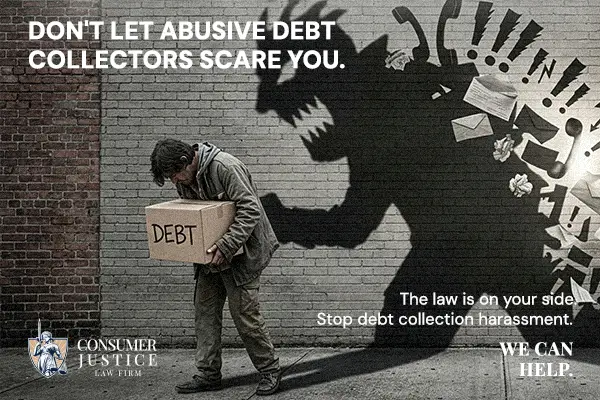
It’s hard to overstate the level of mental and emotional stress involved in debt collection harassment. In fact, that’s the point of it. A common tactic of debt collection harassment is to intentionally create overwhelming stress and anxiety through fear and intimidation tactics.
REPUTATIONAL DAMAGE
If debt collectors pursue you at work or through friends, relatives, employers, social media, and other avenues in ways that violate the rules of debt collection, it can damage your reputation among peers, colleagues, and others.
How Common is Debt Collection Harassment?
Debt collection harassment is a very common problem experienced by thousands of consumers every single day. In fact, research by the Consumer Financial Protection Bureau found that as many as 25% of all consumers contacted by debt collectors felt threatened by the interaction they had.
While many people believe there’s nothing they can do if they actually owe the debt, that is not true. The fact that you may actually owe a debt doesn’t mean debt collectors have a right to torment you for repayment. There are laws and limitations and you have rights, even when the debt itself if legitimate.
Check out The Consumer Justice Blog for insights into everyday situations in which debt collection practices cause serious harm to U.S. consumers.
What is the Fair Debt Collection Practices Act?
The Fair Debt Collection Practices Act (FDCPA) is a federal law that sharply limits the way debt collectors can engage with you to seek repayment for on an outstanding debt.
It sets out clear legal obligations that debt collectors must follow, and very clear legal rights that you can enforce to protect yourself and preserve your peace of mind.
Debt collection attorneys rely on this critical legislation to build the best possible cases and get the best possible outcomes for anyone dealing with debt collection harassment issues.
Your Rights Under the FDCPA
Under the Fair Debt Collection Practices Act (FDCPA), debt collectors CANNOT
- Harass, abuse, or threaten you. This includes cursing at you or suggesting criminal arrest or similar. Keep notes on every interaction, phone call, letter, etc., because you have to demonstrate a pattern of abuse and harassment.
- Call you constantly. Debt collectors are limited by the 7-in-7 Rule. They can only call you up to seven times in seven days. This includes leaving voicemail. And, if a debt collector speaks to you directly at any point, they must wait another seven days before contacting you again. Violating the 7-in-7 Rule is considered proof of harassment.
- Call you at night. Debt collectors can only call you between 8 a.m. and 9 p.m. in your time zone.
- Call you at work. If you inform a debt collector that you can’t take personal calls at work, they can no longer call you during work hours. If they do, it’s proof of harassment.
- Force you to talk at inconvenient times. If you inform a debt collector that it’s inconvenient for you to talk (for instance, if you’re at a medical appointment, school event, or similar), they must end the call immediately.
- Publicly contact you on social media. Debt collectors can only contact you on social media through private messaging. They cannot post publicly that you owe a debt or they’re trying to reach you.
- Contact you by text, email, or social media if you opt out. You have the right to opt out of these contact methods and they have to make it easy for you to do so.
- Contact you if you’re working with an attorney. If you provide a debt collector with the name and contact info (address and phone number) for your lawyer, they typically have to go through your lawyer going forward.
- Have their lawyers harass you instead. Collection agencies and other companies can’t just have their lawyers harass you. The same rules apply.
3 Steps To Fight Debt Collection Harassment
Under the Fair Debt Collection Practices Act, you have significant rights to fight debt collection harassment. Taking these three steps will set you on the right path toward recovery.
STEP 1: Ask for debt validation and don’t overshare
You have a right to request a debt validation letter from the debt collector. This is a formal letter they must send you within 30 days that provides “proof” the debt is yours. It should provide info about the account, the amount, the original creditor, the dates, etc.
Requesting this letter puts a temporary stop to debt collection efforts until the letter is received. It is also a key step in the dispute process. If the debt collector can’t provide proof you owe the debt, it is unlawful to continue any collection efforts.
Also, don’t overshare. Don’t confirm you have a debt, explain why you have a debt or why you can’t pay it, agree to repay it, agree to repayment terms, or make a payment. Make them verify the debt first!
STEP 2: Keep records and notes about every interaction
From the first phone call until it ends, keep detailed notes about every interaction. Be sure to note the date, time, any names you can get, and a summary of what is said (especially any hostile, threatening, abusive, ominous, or harassing language), where you were (at work, asleep, etc.), and what you said to them.
Also keep track of any attempted phone calls (unanswered or sent to voicemail), emails you receive, direct messages on social media, contact with colleagues or family members, etc. Make notes and keep documents, emails, letters, screen shots of call logs, etc.
STEP 3: Talk to a lawyer
When you’re working with a debt collection harassment lawyer and you’ve provided your lawyer’s contact information to a debt collector, they typically have to leave you alone and only communicate through your lawyer from that point forward.
Once your lawyer is in the mix, not only do they field the phone calls, they also investigate the debts, disputes, and allegations of debt collection harassment. At any step in this process, getting a free consultation from a debt collection lawyer is the best bet for a personalized recovery action plan.
Should I trust someone who says I owe a debt?
No. No one who calls, emails, texts, or sends correspondence out of the blue should just be taken at face value.
Sometimes you don’t recognize a debt because it’s a genuine error and shouldn’t be linked to you. Other times, you don’t recognize a debt because it’s a scam. Even if you recognize the name of a familiar company, you should independently verify every detail without clicking any links, responding, offering any information, or acknowledging the communication in any way.
Do not use any info provided by the debt collection agency to verify the debt. Call entities, lenders, insurance companies, healthcare providers, etc., using whatever contact information you already have on file. Also, research the name of the debt collection agency. Frequently, scams target a wide audience, so you may be able to quickly identify a scam.
Common Debt Collection Companies
- Midland Credit Management
- Portfolio Recovery Associates
- Credit Systems International
- Transworld Systems
- National Credit Systems
- Client Services, Inc.
- LVNV Funding
- Radius Global Solutions
If you experience challenges with the debt collection or reporting practices of any of these companies, or other similar companies, you have rights under the FDCPA and FCRA that can be enforced to protect you.
What if Data Errors Show a False Debt or Amount You Don’t Actually Owe?
How could debt collection harassment be any worse? When it’s based on a debt or amount that isn’t even real or accurate.
The good news is that not only do you have the right to fight debt collection harassment, you also have the right to fight the underlying credit report errors or financial statement errors that made you a target in the first place.
You’ll need to dispute the errors with the companies that are reporting the errors (credit bureaus, credit card companies, banks and lenders, retail accounts, etc.).
- Review everything. Check your financial statements, billing statements, and credit reports for mistakes.
- Gather any evidence. Identity and collect the documentation you have to support your dispute.
- Write a dispute letter. a thorough and clear letter explaining exactly which information is wrong and why.
- Mail the dispute letter and documentation. Your letter, along with copies of supporting documents, should be sent via certified mail. This preserves your rights and leaves an easily traceable trail. Avoid using online dispute platforms if they make you waive your legal rights.
- Keep records. Save a copy of all letters and documents for your file, along with mail receipts.
- Track the days. Credit bureaus and other companies have 30 days to respond.
- Don’t give up. If they don’t respond, don’t investigate, don’t fix the errors, or claim that their investigation confirmed the bad data, talk to a lawyer.
Beware of so-called debt dispute companies. They charge fees to offer minimal guidance after you’ve been sued for an unpaid debt. Debt collection harassment lawyers actually know the law, work with you for nothing out of pocket, and get paid by the debt collectors when we win.
Read more about disputing consumer reporting errors on our Credit Reporting Errors practice page.
What Does a Debt Collection Harassment Lawyer Do?
- Supports the entire process. A debt collection harassment lawyer navigates the entire process with you, from putting an immediate end to harassing phone calls to filing a lawsuit if needed.
- Researches and explains the law. Understanding the specific facts of your situation in light of the applicable law is how a lawyer builds a strong claim. A lawsuit should go after debt collection agencies and credit bureaus using every possible legal option available.
- Understands the problems. An experienced consumer protection lawyer has seen, heard, and handled every type of debt collection harassment problem.
- Anticipates legal challenges. A lawyer knows the tactics used by these agencies to bully, harass, threaten, scare, and intimidate you. They profit from your fear. We win when you win.
- Provides personalized legal guidance. A lawyer helps you gather necessary data and evidence, craft and file legally sound disputes, and advise you of your rights and best practices along the way.
- Files a strategic lawsuit. If you’re being targeted by debt collection harassment or pursued for debts you don’t owe, a lawyer will a lawsuit to hold debt collectors accountable.
- Seeks compensation. If you’ve been harmed by unscrupulous debt collectors and you’re entitled to compensation, a lawyer knows how to make the claim and maximize the potential outcome.
How Much Does a Debt Collection Harassment Lawyer Cost?
If you work with a law firm that relies on fee-shifting arrangements under federal law, the answer to this is simple: it costs you nothing out of pocket to work with a debt collection harassment lawyer.
You can also get a free consultation so that you pay nothing to have your case evaluated by a lawer.
Do I need to work with a lawyer if I’m being harassed by a debt collector?
As with all areas of consumer protection law, the answer is no. You do not have to work with an attorney to handle debt collection harassment.
However, working with a lawyer early in the process is one of the best ways to preserve your sanity, protect your finances, and optimize your outcome. Whether you’re legitimately in debt collections and being harassed or you’re unfairly being targeted for a debt you don’t owe, debt collectors are especially good at playing on your fears of financial, reputational, and emotional harm.
By its very nature, debt collection is an industry that seeks to exploit common vulnerabilities and a general lack of knowledge in order to get as much profit as possible, as quickly as possible. Don’t underestimate how fast debt collection harassment can snowball through your life or the value of working with a seasoned professional to protect yourself.
Frequently Asked Questions
Can a debt collector keep calling after I dispute a debt?
Yes. A debt dispute does not automatically stop all collection activity. However, debt collectors must comply with applicable consumer protection laws and collection requirements while handling disputed debts.
Can a debt collector call me every day?
Generally not. Though you may be suprised how frequently they are allowed to call you, there are limits. Frequent calls may violate federal law if they are intended to harass or exceed the legal limits established by debt collection regulations under what is commonly known as the 7-in-7 rule.
Can a debt collector contact my family?
Yes, but there are limitations. Debt collectors generally have limited rights to contact third parties to locate you, but generally cannot disclose details about your debt to family members, friends, neighbors, or coworkers.
Can a debt collector threaten to arrest me?
No. Debt collectors generally cannot threaten arrest or criminal prosecution as a collection tactic.
What evidence helps prove debt collection harassment?
Call logs, voicemails, text messages, emails, letters, screenshots, and notes documenting communications can help establish a pattern of misconduct.
What if the debt is not mine?
If a collector is attempting to collect a debt that does not belong to you, request debt validation, dispute the debt, and keep records of all communications. Talk to a lawyer to see if you have the right to file a lawsuit and seek compensation.
Can I recover money for debt collection harassment?
Yes. You have the right to recover statutory damages, actual damages, attorney’s fees, and costs, depending on the circumstances.
If you are experiencing debt collection harassment, facing collection efforts on a debt you don’t owe, have debt reporting mistakes, or have been harmed by debt collectors, get a FREE Consultation. You pay $0 out of pocket. We only get paid when we win. No Justice, No Fee™