
Quick Takeaway
A tenant screening background check helps landlords evaluate rental applicants, but errors in these reports can lead to housing denials. Common problems include mixed files, inaccurate criminal records, outdated evictions, and incorrect credit information. Under the Fair Credit Reporting Act (FCRA), you have the right to dispute tenant screening report errors.
What Is a Tenant Screening Background Check?
A tenant screening background check is a report prepared by a background check company specializing in screening rental applicants that includes a compilation of your financial, criminal, and other data. Property owners, landlords, leasing offices, and property management services rely on these reports to decide whether you’re a responsible tenant – or a potential late-payment headline waiting to happen. In other words, it is the landlord’s version of a crystal ball.
The process of putting together your rental screening report includes third-party tenant screening services that dig through public and private databases to create a detailed profile of you as a renter.
These checks typically combine multiple reports: a tenant credit check to see how you handle debt, a rental history report to see where you’ve lived (and whether you’ve paid rent), and a criminal background check to make sure you’re not on any “do not lease” lists.
Common Companies That Run Tenant Screening Reports
Why Do I Need a Tenant Background Check?
Tenant screening background check reports are supposed to help landlords make fair, informed decisions, so many places require these reports as a necessary step in the rental application process.
What Can Go Wrong with a Rental Background Report?
When the reports get the facts wrong, the consequences can follow you for years. From mistaken criminal records to outdated evictions, one bad data entry can become your biggest housing obstacle.
Data errors that paint you as unreliable, irresponsible, or even dangerous – all because a tenant screening service mixed up your file, name, birthdate, or social with someone else’s- isn’t just annoying; it’s unlawful. For renters already navigating the pressure of high rents, limited housing, and strict credit requirements, these errors can be devastating.
In theory, these reports make sense since landlords want reliable tenants. But in practice, these systems often pull from outdated, mismatched, or poorly maintained databases. A typo in your Social Security number, an old eviction that should’ve been deleted, or someone else’s record with a similar name – can all land in your file.
So while you may need to submit to a tenant screening background check, you also need to make sure it’s accurate. After all, where you live shouldn’t depend on someone else’s data entry error.
What Information Is in a Tenant Screening Background Check?
The tenant screening background check is like a mash-up of every report card you’ve ever received – financial, legal, and personal. It’s designed to show your “rental reliability,” but the information it contains can be alarmingly broad. Here’s what shows up on a tenant screening report:
Credit Report
- Pulled from the major credit bureaus (Experian, Equifax, and TransUnion), this report shows your credit score, payment history, credit limits, and any negative marks such as charge-offs or bankruptcies.
Eviction and Rental History Reports
- Tenant screening reports may also include rental history verification. This is often the key to uncovering your past rental record and any issues. It reveals past evictions, judgments, or disputes with landlords. Even dismissed eviction cases or old rental debts sometimes appear due to database lag.
- Details from former landlords or property management services about whether you paid on time or kept the property in good condition may also be included.
- For people who’ve since rebuilt their records, seeing an outdated eviction history check for renters can feel like a cruel joke. Unfortunately, while you may be up at night Googling “how to check my rental history,” you don’t typically see what’s on it until you’re actively applying for a rental.
Criminal Background
- Landlords use this to flag potential risks, but mistakes are common. Old, sealed, or expunged criminal records often linger, and duplicates can make a single incident look like a pattern.
- Watchlists and offender registries are usually also included.
Identity and Address Verification
- This section confirms that your name, birthdate, and SSN align. Yet even a minor clerical error can link your report to someone else’s address or criminal record.
Employment and income verification
- This involves confirming that you’re employed and that what you’ve listed on your application regarding your income aligns with the data on file.
Social media
- Not all renter background checks will include a social media scan, but some may. Some tenant scoring algorithms may include this.
In addition to what these reports are checking, there is also some variation in how they engage with the data being gathered. For instance, some reports include the use of “tenant scoring” algorithms, which assign a score, similar to a credit score, to a rental applicant based on a proprietary analysis of all of the data.
Landlords love these tools because they promise to reduce risk. But for renters, the process can feel more like surveillance than screening, especially when the results are inaccurate.
Common Tenant Screening Report Errors and Their Impact- At a Glance
| Error Type | Potential Consequence |
|---|---|
| Mixed file | Someone else’s information appears on your report, including wrong financial, credit, criminal, or eviction history |
| Incorrect criminal record | Rental denial or additional screening |
| Outdated eviction | Landlord views applicant as high risk |
| Incorrect address history | Questions about rental stability |
| Credit reporting errors | Lower tenant screening score |
| Sealed or expunged record reported | Unfair housing barriers |
| Duplicate records | Makes prior issues appear repetitive |
What Are the Most Common Tenant Screening Background Check Errors?
Rental background check errors can include any information that is inaccurate, incomplete, outdated, false, unreportable, misleading, duplicate, or someone else’s. Though this is broad and covers inaccuracies of all types, these tend to be among the most common:
Mixed Files (Credit and Criminal Are Most Common)
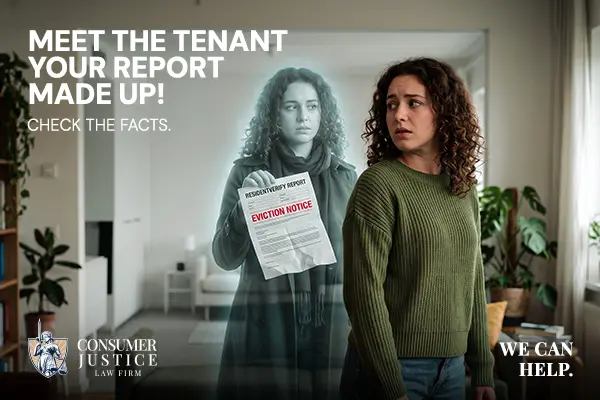
A “mixed file” happens when someone else’s information – credit, criminal, or both, gets merged with yours. These errors usually occur when you share similar personal details with another person (name, birthdate, social security number, or address). Suddenly, your tenant screening background check shows a credit card default or criminal conviction that belongs to someone else.
The impact? Massive. A landlord sees a “criminal record” or unpaid rent and denies your leasing application on the spot. Mixed files are especially dangerous because they’re difficult to untangle – once bad data gets copied across systems, it multiplies like wet gremlins.
Under the Fair Credit Reporting Act, you have the right to demand corrections and even sue for money if the company refuses to fix the mix-up. But until you do, your digital doppelgänger might keep wrecking your rental life.
Outdated Info (Old Evictions, Bankruptcies, etc.)
Your past shouldn’t haunt your lease application forever, but some tenant screening services didn’t get the memo.
Even when your bankruptcy was discharged or your eviction case was resolved years ago, outdated data can resurface in your rental background check like a bad sequel.
Criminal History Errors (Duplicates, Old or Inaccurate Charges & Dispositions, Sealed or Expunged Records)
Few things can sabotage a tenant screening background check faster than an inaccurate criminal record. And, unfortunately, it’s also one of the most common errors.
Records that should have been sealed or expunged often remain visible because screening databases pull from outdated or incomplete public sources.
Worse yet, duplicate entries make a single charge appear multiple times, exaggerating the seriousness of your history. So instead of one misdemeanor from 2014, your tenant screening report might show three. That’s enough to send your leasing application straight to the “we’ll call you” pile.
Sealed or expunged records should not appear on a consumer report, and if they do, the screening company could face significant liability.
Inaccurate dispositions or misleading entries also count as errors. e.g. a misdeanor reported as a felony or failing to indicate that charges were dropped or never filed.
Clerical Errors (Names, Addresses, SSNs)
Sometimes the most damaging errors are also the simplest. A clerical mistake like a misspelled name, wrong middle initial, or incorrect Social Security number can create a chain reaction of incorrect data. One typo can link you to someone else’s criminal or financial record, and suddenly your tenant screening report looks like a plot twist from a legal thriller.
Even mismatched addresses can cause problems, leading landlords to assume you’ve moved constantly or hidden prior evictions. These aren’t minor glitches – they’re violations of your right to accurate reporting under the FCRA.
The law requires tenant screening services to use “reasonable procedures” to ensure maximum possible accuracy. When they don’t, you have grounds to challenge the report and seek compensation for the damage done.
Can an Old Eviction Appear on a Tenant Screening Report?
Yes. But under the Fair Credit Reporting Act (FCRA), negative information such as evictions or judgments generally can’t stay on a consumer report beyond seven years. Since tenant screeing reports fall under the FCRA, this means that your old evictions will show, but their time on your report should be limited, not indefinite.
Yet screening companies often fail to purge old eviction entries, leaving renters unfairly branded as high risk long after the circumstances that lead to the prior eviction may have changed.
The result? You could be turned away for something that may be factually accurate, but legally shouldn’t even be on your record.
What Are My Rights Under the (FCRA) as a Renter?
The Fair Credit Reporting Act (FCRA) gives renters the right to accurate, fair, and verified tenant screening background checks.
The FCRA doesn’t just cover credit bureaus (as many people assume), it applies to any company that compiles or sells consumer reports, including tenant screening services like TransUnion SmartMove or RentSpree, for example.
Your rights under the FCRA include:
- Notification: If a landlord denies you based on the report, they must tell you why and identify the source.
- Access: You can request a copy of the report that was used against you.
- Accuracy: You can dispute information that is incorrect, outdated, incomplete, false, unreportable, duplicate, or someone else’s.
- Investigation: The company must review and respond within 30 days.
- Correction or Deletion: Rental history report errors must be fixed or removed.
- Legal Remedies: If a company ignores your dispute or fails to follow these rules, you can sue for damages and attorney’s fees.
Many renters don’t realize that tenant screening report errors are treated the same as credit report errors under federal law. This means the same protections that apply to Equifax, Experian, and TransUnion also cover the tenant screening companies deciding your fate.
If your FCRA rights have been violated as a renter, you have strong legal options.
How Do I Dispute a Tenant Screening Report?
If your tenant screening background check contains errors, don’t panic. You can file a dispute. The process takes some patience, and may require legal intervention, but your record can be fixed if you know how to dispute tenant screening report errors.
- Get Your Report: Start by requesting a copy from the background check company that provided it to your landlord. You’re legally entitled to a free copy.
- Identify the Problems: Highlight inaccurate addresses, false criminal charges, or outdated evictions. Anything that doesn’t match your actual record is worth disputing.
- Gather Proof: Collect court documents, ID copies, and payment records that prove the data is wrong. Evidence is your best weapon.
- Send a Written Dispute: File a formal dispute with the tenant screening service, preferably by certified mail – clearly stating what’s wrong and including your proof.
- Wait for the Investigation: The company typically has 30 days to investigate and update your record. They must contact the original data source and verify every claim.
- Follow Up: After 30 days, you should receive a corrected report. If they refuse to fix it, never respond, conduct an inadequate investigation, or you’ve suffered harm because of it (like being denied housing), you should consult a tenant screening report errors lawyer to disuss next steps.
If the same inaccurate information reappears later, that’s called “reinsertion” – and it’s another violation of the FCRA. Thousands of renters have successfully sued screening companies for failing to correct or delete bad data.
Do I Need a Lawyer to Fix Rental Background Check Errors?
You do not need a lawyer to dispute reporting errors, but there are reasons to consider working with one. Sometimes a polite letter isn’t enough. When tenant screening background check errors get you denied from a rental, lead to a higher security deposit or other financial harm, cause stress or reputational damage, or your dispute gets ignored or mishandled, a lawyer can help.
Tenant screening error lawyers:
- Do the heavy lifting – reviewing your report, identifying legal violations, and contacting the screening company directly. So, you won’t have to chase customer service or decipher legal jargon.
- Enforce the law. If a screening company fails to correct errors, ignores your dispute, or continues reporting outdated data, a lawyer can take legal action right away.
- Fights for financial compensation when companies break the law, including damages for lost housing opportunities, reputational harm, and stress.
- Holds the screening agency accountable and makes sure your rental history report, credit report, and background information reflect the truth so you can rent with confidence again.
Don’t let a lazy algorithm keep you locked out of your next home. With the right legal team, you can clear your name, fix your rental history report, and finally move forward.
Get Corrections & Compensation with Consumer Justice Law Firm
Your tenant screening background check shouldn’t be a roadblock to finding a home. Yet every year, renters lose housing opportunities because of mixed files, outdated data, or criminal records that were supposed to be sealed.
You have the right to accurate, verified information, and the power to fight back when companies get it wrong. Consumer Justice Law Firm holds these agencies accountable under the Fair Credit Reporting Act, forcing them to fix mistakes, pay damages, and cover your legal fees.
If your rental application was denied due to an inaccurate background check, or you suspect errors in your rental history verification, don’t wait. Contact Consumer Justice Law Firm today. No upfront cost. No nonsense. Just justice.
Frequently Asked Questions
Yes. Tenant screening reports can contain mixed files, inaccurate criminal records, outdated eviction information, and other reporting errors.
Request a copy of the report, identify any inaccuracies, gather supporting documentation, and submit a dispute to the tenant screening company.
Generally, the screening company must investigate and respond within 30 days after receiving a dispute.
Yes. Mixed-file errors can cause another person’s criminal, credit, or rental history information to appear on your report.
Yes. Though a lawsuit isn’t always required, when tenant screening companies fail to follow the FCRA, fail to correct inaccurate information, or cause you harm through reporting errors, the law allows you to consider a lawsuit as a viable option.
If tenant screening background check mistakes got your rental application denied or caused other harm, get a FREE Consultation. You pay $0 out of pocket. We only get paid when we win. No Justice, No Fee™