
Quick Takeaway
Credit report errors can be especially disruptive for retirees, who often depend on fixed incomes, careful budgeting, and smooth access to housing, credit, and essential services. From small inaccuracies, like misreporting late payments and old debts, to major reporting errors like mixed credit files and identity theft-related data, these errors often result in significant financial and emotional stress. Retirees have the same rights under the Fair Credit Reporting Act (FCRA) as everyone else, including the right to dispute inaccurate information and seek corrections and compensation when reporting failures cause harm.
Why Credit Reports Still Matter After Retirement
Retirement is supposed to simplify life in some ways. Unfortunately, your credit report may not have gotten the memo.
Even after leaving the workforce, credit can still affect housing, borrowing, insurance, utilities, and major financial decisions. This means that credit report errors affecting retirees can create problems at a stage of life when predictability matters most.
Inaccurate reporting can follow consumers into important financial decisions. Credit report errors and retirees can be a particularly difficult combination because an error may collide with fixed-income planning, a move, a refinancing decision, or an unexpected need for credit.
Retirement does not make your credit report irrelevant. Credit report errors affecting retirees can still influence decisions made by lenders, landlords, insurers, and service providers. Understanding how credit report errors harm retirees is the first step toward protecting yourself.
Credit Reports Affect More Than Borrowing
Retirees may still use credit for:
- Basic living expenses
- Reverse mortgages
- Auto loans
- Credit cards
- Personal loans
An inaccurate late payment, collection, balance, or account could affect approval or pricing. Credit report errors for seniors can be especially disruptive when you’re trying to preserve cash rather than make a large purchase outright.
Credit Can Impact Other Financial Decisions
Credit information may also matter in:
- Rental housing
- Insurance underwriting
- Utility and service accounts
A retiree downsizing into an apartment, for example, may suddenly discover a problem that had been sitting quietly on a credit report for months. This means credit report errors affecting retirees have a habit of becoming visible at the least convenient moment.
Common Credit Report Errors Affecting Retirees - At a Glance
| Error Type | Example | Potential Impact on Retirees |
|---|---|---|
| Mixed Credit File | Another person’s account appears on your report | Loan denials, lower credit scores, housing issues |
| Identity Theft | Fraudulent credit card or loan opened in your name | Unexpected debt, collections, damaged credit |
| False Late Payments | Timely payments reported as delinquent | Higher interest rates, reduced credit access |
| Incorrect Account Balance | Paid debt reported as still owed | Inflated debt-to-income ratios, borrowing difficulties |
| Outdated Negative Information | Old collection account remains beyond reporting period | Lower credit scores and unnecessary financial obstacles |
| Duplicate Accounts | Same debt reported multiple times | Misleading debt burden and credit score impact |
| Incorrect Account Status | Closed account reported as charged off or delinquent | Adverse lending and housing decisions |
Common Credit Report Errors That Affect Retirees - A Deeper Dive
There is no special category of mistakes reserved for senior consumers. The same reporting problems that affect younger consumers can follow people into retirement, sometimes with added consequences.
Common senior credit report errors can involve ownership, payment history, balances, account status, or information that is simply too old to remain.
Accounts That Don’t Belong to You
An unfamiliar account may result from a mixed file, identity theft, or a data-matching error.
- Mixed files can occur when information belonging to another person is placed in your credit file.
- Similar names, Social Security number similarities, addresses, or other identifying information may contribute to the problem.
Mixed credit files affecting seniors can be particularly frustrating because the consumer may have decades of legitimate credit history mixed with information that plainly belongs to someone else.
Identity Theft and Elder Fraud
Seniors can also be targets of identity theft, scams, or financial exploitation. Warning signs may include:
- New accounts opened without permission
- Unauthorized inquiries
Identity theft affecting seniors can create multiple credit report errors affecting retirees at once. One fraudulent account may lead to inquiries, balances, late payments, collections, and other damaging information.
Incorrect Payment History
Retiree credit report mistakes involving payment history can be especially harmful when an otherwise strong credit record suddenly appears delinquent. A credit report may incorrectly show:
- False late payments
- Reporting mistakes after account transfers
A mortgage or credit card transferred to a new servicer can create confusion if payment history is reported incorrectly.
Inaccurate Account Statuses or Balances
Retiree credit report errors involving balances and account status can make a consumer appear to owe money that is no longer due. Common problems include:
- Paid debts listed as unpaid
- Incorrect charge-offs
If an account was paid, settled, transferred, or closed, the report should accurately reflect what occurred.
Outdated Information That Should Have Been Removed
Senior credit report inaccuracies may involve information that should have aged off but continues appearing. Most negative credit information cannot remain forever. Examples include:
- Old collection accounts
- Obsolete negative information
Most negative information is generally subject to a seven-year reporting period, although some information, such as certain bankruptcy information, can remain longer.
How Credit Report Errors Can Harm Retirement Security
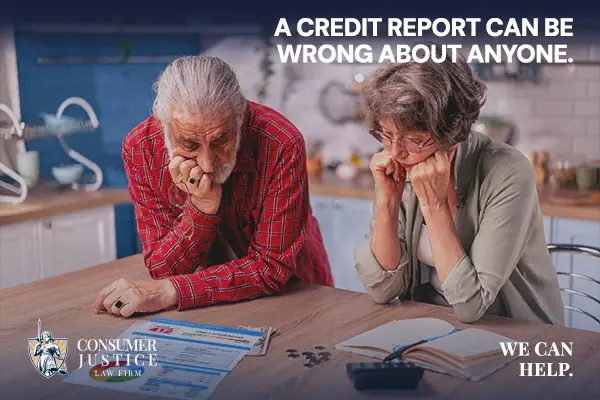
Credit report errors and retirement security are connected because retirees often plan around carefully managed income, savings, and expenses. An unexpected credit problem can upset those plans quickly.
Difficulty Obtaining Affordable Credit
Credit report errors affecting retirees can lead to denials or less favorable credit terms. Even when credit is approved, inaccurate negative information may contribute to higher borrowing costs.
This is especially important when someone needs an auto loan, emergency credit, a home-equity product, or another source of financing. Nobody wants to pay more because a credit bureau data matching system believes something that isn’t not true.
Problems Renting a Home or Senior Housing
Landlords and housing providers may use consumer reports when evaluating applicants for housing, particularly in 55+ communities. Credit report errors affecting retirees can therefore complicate a move to an apartment, rental home, or senior-living community.
A consumer preparing to downsize should not have to explain a collection account belonging to someone else with the same name.
Increased Stress and Financial Uncertainty
Credit problems are stressful at any age. During retirement, however, a reporting error can create uncertainty about whether a planned move, purchase, or financial arrangement will still work.
Repeatedly disputing credit report errors affecting retirees can also become exhausting when the consumer has already provided clear documentation.
Delays During Major Life Transitions
Credit report errors affecting retirees may not merely affect a number on a report; they can interfere with decisions involving housing, transportation, and family. This is primarily because retirement often includes major transitions, such as:
- Downsizing
- Relocating
- Assisting family members financially
A reporting error can delay or derail these plans without warning.
Why Retirees May Be More Vulnerable to Credit Reporting Problems
Many retirees apply for new credit less frequently than younger consumers, which means they may not review their credit reports as often. As a result, errors can go unnoticed for months or even years until a lender, landlord, insurer, or housing provider reviews the report during an important financial decision. Credit report errors affecting retirees can create costs or delays that were never part of the plan.
Greater Risk of Identity Theft
Retired consumers may be targeted through phishing, impersonation scams, account takeovers, or other fraud. When stolen information is used to open accounts, inaccurate information can eventually reach the credit bureaus.
Less Frequent Credit Monitoring
A retiree who is not applying for credit regularly may check credit reports less often. This can allow credit report errors affecting retirees to remain unnoticed until a lender, landlord, or other business pulls the report.
Fixed-Income Financial Planning
Many retirees carefully budget around Social Security, pensions, retirement accounts, savings, or other relatively predictable income.
What the Fair Credit Reporting Act Says
The Fair Credit Reporting Act (FCRA) for seniors is not a separate statute. Retirees receive the same federal FCRA protections available to other consumers.
Your Right to Accurate Reporting
Consumer reporting agencies must follow reasonable procedures designed to assure maximum possible accuracy. Since credit report errors affecting retirees can involve incorrect accounts, balances, payment history, or other information, this accuracy requirement matters.
In a credit report, any information that is inaccurate, incomplete, false, someone else’s, outdated, unreportable, duplicate, or misleading, is a credit report error.
Your Right to Dispute Errors
Consumers have the right to dispute inaccurate or incomplete information with the credit bureaus. You may also dispute information directly with the company that furnished it.
Disputing credit report errors after retirement should be specific. Identify what is wrong, explain why, and provide documents that support your position.
Duties of Credit Bureaus and Furnishers
After receiving a well-supported dispute, credit reporting agencies generally must conduct a reasonable reinvestigation, meaning that they must reach out to the company that is the source of the information (the furnisher) in question and verify its accuracy.
Furnishers can also have investigation duties after receiving a dispute through a credit bureau or certain direct disputes. A dispute should trigger a genuine review of the problem - not a routine process that simply repeats the same information back to the consumer.
What to Do If You Find a Credit Report Error
Review All Three Credit Reports
Check all credit reports including: Equifax, Experian, and TransUnion. An error appearing with one credit bureau may not appear with the others. You can get your reports for free at annualcreditreport.com.
When investigating credit report errors affecting retirees, compare account numbers, balances, payment history, dates, addresses, and identifying information across all three reports.
Gather Supporting Documentation
Useful records may include statements, payment confirmations, account-closing letters, identity theft reports, correspondence, loan records, and identification documents.
The goal is simple: make the error as easy to understand as possible.
Submit a Dispute
Clearly identify each inaccurate item and explain what should be corrected or removed. Include supporting documentation where appropriate. We recommend disputing through certified mail to create a document trail.
For credit report errors affecting retirees, vague disputes can make an already frustrating process harder. “This account is wrong” is less useful than identifying the exact account, exact error, and evidence proving it.
Keep Records of Communications
Save copies of disputes, attachments, delivery confirmations, responses, updated reports, denial letters, and other communications.
Months later is a terrible time to discover that the only copy of an important dispute lived in an email account you no longer use.
Consider Speaking With a Consumer Protection Attorney
When credit reporting mistakes in retirement aren’t cleared after disputes or they’ve caused harm, getting a free legal consulation is a strong next step.
A credit report lawyer for seniors can evaluate the facts of the errors and dispute process in light of the law and determine whether a lawsuit is appropriate. They can also strategize to optimize the likelihood of corrections and compensation.
When a Credit Report Error May Become an FCRA Violation
Not every inaccurate item automatically creates a lawsuit. The facts surrounding the reporting, dispute, investigation, and resulting harm matter.
Failure to Conduct a Reasonable Investigation
If a consumer submits a meaningful dispute with relevant evidence, an investigation should reasonably address the issue raised.
Senior credit report errors become more concerning when - documentation is ignored, the wrong issue is investigated, or the response appears to do little more than repeat the furnisher’s prior reporting.
Repeating Previously Corrected Errors
An error that disappears and later returns deserves attention. Preserve the old report, along with any correspondence regarding the dispute and the new report so you can show the timeline of w happened and what changed (or didn’t change).
Repeated credit report errors affecting retirees can create a paper trail that becomes important when evaluating whether legal obligations were followed.
Continuing to Report Inaccurate Information
Continued reporting after a well-supported dispute raises FCRA concerns. An FCRA attorney for credit report errors can evaluate whether the conduct supports a legal and whether the harm you’ve suffered is likely to warrant compensation.
How a Consumer Protection Lawyer May Help
At Consumer Justice Law Firm, we look beyond the fact that a credit bureau or furnisher says information was “verified.” The important questions are whether the information is accurate, whether the investigation was reasonable, and what happened to the consumer because of the reporting.
A consumer protection lawyer may help by:
- Evaluating potential FCRA claims
- Identifying and preserving evidence
- Pursuing correction of inaccurate information
- Seeking available damages when appropriate
When retiree credit reporting problems continue after documented disputes, our attorneys can: evaluate the reports, dispute history, investigation results, and resulting harm to determine whether further action may be appropriate.
Frequently Asked Questions
Yes. Credit report errors affecting retirees can affect borrowing, housing, insurance-related decisions, utility accounts, and other financial matters.
Common problems include accounts belonging to someone else, identity theft accounts, incorrect balances, false late payments, duplicate accounts, mixed files, and outdated negative information.
Yes. Even consumers who rarely borrow should periodically review their reports. Credit report errors affecting retirees can remain unnoticed until a major financial decision forces the issue.
Yes. Fraudulent accounts, inquiries, balances, late payments, and collections may appear when someone uses a retiree’s identifying information.
Review your credit report from all three credit bureaus, identify the exact error, gather evidence, dispute the inaccurate information, and preserve your records. If the problem persists, contact Consumer Justice Law Firm for a free legal review.
Yes. While not every credit report error automatically establishes the basis for a successful FCRA claim, credit report error lawsuits are common. Liability can depend on the reporting, dispute history, investigation, legal violation, and resulting harm.
Credit bureaus generally have 30 days to investigate a dispute, although certain circumstances can extend the timeframe. Complex or repeated credit report errors affecting retirees may take longer to fully resolve.
Yes. A landlord or housing provider may review consumer report information when evaluating an application. Inaccurate, negative information can therefore create unnecessary obstacles during a move. If credit report errors continue causing denials, higher costs, housing problems, or other financial harm after documented disputes, contact Consumer Justice Law Firm.
Yes. Lenders may review credit information when evaluating reverse mortgage eligibility and loan terms.
Yes. Some housing providers review consumer reports during the application process.
Yes. All consumers, regardless of age or life stage, can obtain free credit reports from Equifax, Experian, and TransUnion through AnnualCreditReport.com.
If credit report errors are affecting your ability to dream big or live comfortably in retirement, or your dispute has been mishandled or ignored, get a FREE consultation. You pay $0 out of pocket. We only get paid when we win. No Justice, No Fee™