
Quick Takeaway
A credit report error can affect your mortgage application by lowering your credit score, increasing your interest rate, delaying underwriting, or even causing a loan denial. Common problems include inaccurate late payments, collection accountcredit report error lawyers that do not belong to you, mixed-file errors, and identity theft accounts. If a credit report error affects your home purchase, document the problem, dispute the inaccurate information, keep records of any financial harm caused by the error, and consider talking to a credit report error lawyer about your options and whether compensation may be available to you.
What Is a Credit Report Error in a Mortgage Application?
A credit report error in a mortgage application is information appearing on a consumer’s credit report that is inaccurate, incomplete, duplicate, false, outdated, or unreportable that may influence a lender’s decision. Examples include accounts that do not belong to the borrower, incorrectly reported late payments, inaccurate balances, duplicate accounts, mixed-file errors, and identity theft accounts.
Because mortgage lenders rely heavily on credit reports during underwriting, even small inaccuracies can affect loan approval, interest rates, and closing timelines.
Can a Credit Report Error Affect a Mortgage Application?
Yes. A credit report error can affect a mortgage application by:
- Lowering your credit score
- Making you appear riskier to lenders
- Increasing your mortgage interest rate
- Triggering additional underwriting requirements
- Delaying loan approval
- Causing a mortgage denial
- Delaying or preventing closing
Even if the information is inaccurate, lenders may rely on the information appearing in your credit report when evaluating your mortgage application.
Buying a home is stressful enough, even when your credit report is accurate. When your credit report is wrong, the process can become much harder. Errors as seemingly minor as an account that does not belong to you, an incorrect late payment, or an inaccurate balance can make you look riskier to a lender than you actually are.
At Consumer Justice Law Firm, we help consumers deal with inaccurate credit reporting and the harm it can cause. Home buyers should know about credit report errors affecting home purchases and what to do when an error shows up at exactly the wrong time.
Why Mortgage Lenders Rely on Credit Reports
Mortgage lenders use credit information to evaluate the risk of lending you a substantial amount of money over many years. Your credit reports help a lender assess payment history, outstanding debt, collections, available credit, and other information relevant to underwriting.
The problem is obvious: if the information is wrong, the lender may make an important decision using bad data.
Credit report errors impacting home purchases can make a financially responsible borrower appear to have missed payments, accumulated debts that do not exist, or opened accounts they have never heard of.
Your Credit May Be Reviewed More Than Once
Getting preapproved does not necessarily mean your credit report is finished making appearances.
A lender may review your credit during preapproval, underwriting, and sometimes again before closing. This means credit report errors home purchase problems can surface at several stages.
An inaccurate item may lower a score, create questions during underwriting, affect loan pricing, or lead to additional documentation requests. In more serious cases, credit report errors mortgage approval problems actually end with a lender straight up pausing or denying the loan.
A mortgage denied due to credit report errors is especially frustrating because the problem may have little to do with your actual payment history or ability to repay the mortgage. You may be perfectly capable of making the payments, but your credit report simply told the lender a different story.
How Credit Report Errors Can Affect a Home Purchase - At a Glance
| Credit Report Error | Potential Mortgage Impact |
|---|---|
| Incorrect late payment | Lower credit score and higher interest rate |
| Collection account that is not yours | Underwriting concerns or mortgage denial |
| Mixed-file error | Another consumer’s debts may be attributed to you |
| Identity theft account | Increased debt-to-income ratio and loan complications |
| Incorrect balance | May make you appear overextended financially |
| Duplicate account | Artificially inflates debt obligations |
| Incorrect bankruptcy record | Significant underwriting issues |
| Reinserted deleted account | Score reduction and additional underwriting scrutiny |
| Wrong account status | Misrepresents overall creditworthiness |
| Outdated negative information | May unfairly impact loan eligibility |
Common Credit Report Errors That Affect Mortgage Approval
Some of the credit report errors that home purchase applicants encounter are obvious. Others hide in the details until a lender points them out.
Common examples include:
- Accounts belonging to another consumer
- Late payments that were actually made on time
- Incorrect balances or credit limits
- Closed accounts reported as open
- Duplicate debts or collection accounts
- Accounts resulting from identity theft
- Accounts that should have aged off the report
- Incorrect bankruptcy or public-record information
- Deleted inaccurate information that later reappears
- Mixed-file errors involving another consumer
Mixed Files and Identity Theft
Mixed files can be particularly damaging during a mortgage application. A mixed file occurs when information belonging to another consumer becomes associated with your credit report.
Maybe the other person has a similar name. Maybe identifying information was matched incorrectly. Either way, you should not have to explain somebody else’s collection account to your mortgage lender.
Identity theft can create similar problems. Fraudulent accounts may appear with high balances, late payments, or collection activity attached.
The type of credit report errors causing home purchase problems that involve identity theft or mixed files can be especially serious because several inaccurate items may appear at once.
Even a Small Error Can Matter
Not every mistake has to involve a giant mystery collection account. A credit score error home loan problem can result from seemingly smaller inaccuracies involving balances, limits, or payment history.
Mortgage qualification and pricing can depend on credit thresholds. If inaccurate information pushes you to the wrong side of one, the financial consequences may be substantial.
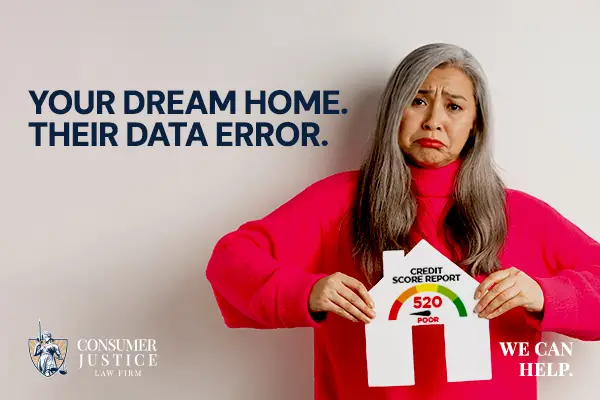
How Errors Can Increase Interest Rates and Loan Costs
Not all credit report errors that disrupt home purchases result in an outright denial. Sometimes the mortgage still gets approved - just on worse terms.
If inaccurate information affects the credit profile used to evaluate or price your loan, it may contribute to a higher interest rate or other unfavorable terms. On a mortgage lasting 15, 20, or 30 years, a difference in interest rate can become expensive.
The Costs Can Go Beyond the Mortgage Rate
Credit report errors affecting home purchases can also create expenses unrelated to the monthly mortgage payment.
Depending on the circumstances, a reporting problem may contribute to:
- An expired rate lock
- A larger required down payment
- Additional loan costs or points
- Delayed moving plans
- Temporary housing costs
- Storage expenses
- Lost earnest money
- Additional appraisal or transaction expenses
- A lost home purchase
A closing that eventually happens is not necessarily a closing that happened without damage.
If credit report errors impact your home purchase or cost you money, document it.
At Consumer Justice Law Firm, we encourage consumers to save loan estimates, rate quotes, denial notices, lender emails, closing documents, receipts, and other records showing what happened. A clear timeline can be especially useful: what was reported, when you discovered it, when you disputed it, how the companies responded, and what happened to your mortgage afterward.
Signs a Credit Report Error May Be Affecting Your Mortgage Application
You may want to review your credit reports closely if:
- Your credit score suddenly drops before applying for a mortgage
- Your lender asks about accounts you do not recognize
- You are offered a higher interest rate than expected
- Underwriting requests unexpected documentation
- A preapproval amount changes significantly
- Your debt-to-income ratio appears incorrect
- A lender mentions collections or late payments you do not believe are accurate
What to Do if You Discover an Error During the Homebuying Process
Timing matters enormously when credit report errors impact home purchases. Home buyers are often working against financing contingencies, rate-lock expirations, closing dates, lease deadlines, and sellers expecting the transaction to happen on schedule.
There is rarely a convenient moment for an inaccurate credit report mortgage loan problem to appear.
If You Find the Error Before Applying
The earlier you find an error, the more time you have to deal with it.
Reviewing your reports before serious mortgage shopping can help you identify inaccurate information before an underwriter is waiting for answers. Catching credit report errors affecting a home purchase early gives you more time to dispute inaccurate information before underwriting becomes urgent.
If you discover credit report errors, home purchase planning should include gathering documents that show why the information is wrong.
Depending on the error, this might include:
- Bank statements
- Account records
- Payment confirmations
- Letters from creditors
- Identity-theft documentation
- Court records
- Prior dispute results
Then dispute the inaccurate information with the consumer reporting agency reporting it. In addition, and depending on the situation, you may also want to dispute the information with the company furnishing the data.
At Consumer Justice Law Firm, we generally recommend keeping strong records of important credit disputes. When appropriate, certified mail can be useful because it helps create evidence showing what you sent and when it was received.
The goal is to create a record in case the error is not properly corrected.
If the Error Appears During Underwriting
Finding an error during underwriting does not automatically mean the purchase is over, but home purchase problems caused by credit report errors that appear at this stage require quick attention.
Tell your mortgage professional what happened and ask what documentation the lender needs. At the same time, begin addressing the inaccurate reporting.
A credit dispute before closing on a home can become time-sensitive very quickly. Keep copies of your dispute, supporting documents, delivery information, responses, emails, and mortgage communications.
You may be dealing with the credit bureau, furnisher, mortgage lender, real estate agent, and closing deadline at the same time and - organization matters!
Your Rights Under the Fair Credit Reporting Act (FCRA)
The Fair Credit Reporting Act, or FCRA, gives consumers important rights concerning inaccurate information in consumer reports.
Consumer reporting agencies, which includes the primary culprits in this type of scenario- the credit bureaus, generally must follow reasonable procedures to assure maximum possible accuracy.
When a consumer properly disputes information, Equifax, Experian, and TransUnions generally must conduct a reasonable reinvestigation and consider relevant information submitted with the dispute.
Furnishers of consumer information also have obligations under the FCRA after receiving notice of certain disputes through a consumer reporting agency. These requirements matter in FCRA credit report errors mortgage disputes because a mortgage decision can carry substantial financial consequences.
What If the Bureau Says the Account Was “Verified”?
This is where many consumers become understandably frustrated. You identify the error. You provide documents to dispute it. You explain exactly why the information is wrong.
Then the credit bureau responds that the account was “verified,” while the same incorrect information remains. A verification response does not magically make wrong information correct.
If credit report errors stirring up home purchase problems remain after a dispute, review the response carefully.
Ask yourself:
- Did the bureau address the specific issue you raised?
- Did it appear to consider the documents you provided?
- Is the information still demonstrably inaccurate?
A dispute should involve a reasonable reinvestigation, not simply returning the same information to the consumer with a new letter attached.
When false information remains despite a meaningful dispute and strong supporting documentation, the adequacy of the investigation becomes important.
When to Consider Legal Help for Credit Report Errors
Not every credit reporting problem requires an attorney. But some credit report errors home purchase situations deserve closer attention - especially when you have already done what consumers are normally told to do.
You identified the mistake. You disputed it. You provided evidence. And the error is still there. When credit report errors arise during the home purchase process, keep detailed records of the dispute, the company’s response, and any financial harm the false reporting caused you.
At Consumer Justice Law Firm, we recommend considering legal help when:
- You submitted a clear dispute and the error was not corrected
- The bureau or furnisher repeatedly verifies information that is verifiably wrong
- Important supporting documents appear to have been ignored
- The investigation appears inadequate
- Deleted inaccurate information reappears
- A mixed-file problem continues after you report it
- Identity-theft information remains on your report
- Your mortgage was denied because of inaccurate reporting
- You received a higher interest rate or worse loan terms
- Your closing was delayed
- You suffered significant out-of-pocket losses
- You lost the opportunity to purchase the home
How Consumer Justice Law Firm Approaches These Cases
When someone contacts our firm about credit report errors affecting a home purchase, we look at the entire story.
We ask:
- What was reported?
- Why was it inaccurate?
- What evidence did you submit?
- How did the bureau or furnisher respond?
- Did the error remain?
- And most importantly, what happened to your mortgage transaction because of it?
We are not interested in simply telling consumers to “dispute it again” when they have already submitted a meaningful dispute and the problem remains.
If your mortgage was denied, save the denial. If your rate increased, keep documents showing the terms you were offered. If closing was delayed and you incurred additional expenses, save those records too.
Credit report error causing home purchase disputes can become legal issues when companies fail to meet their obligations under federal law and inaccurate reporting causes harm.
For many buyers, a home purchase represents years of saving and planning. You should not lose that opportunity because a company responsible for reporting or investigating your credit information failed to take an error seriously.
If inaccurate credit reporting has interfered with your mortgage application or home purchase, we can review what happened, explain your rights under the FCRA, and help you determine what steps to take next.
Frequently Asked Questions
Yes - unfortunately. Credit report errors causing home purchase problems are not uncommon. They can affect mortgage approval if incorrect information makes you appear less creditworthy than you actually are. An error can also delay underwriting or affect the loan terms offered.
Incorrect late payments, collections, balances, duplicate debts, identity-theft accounts, accounts belonging to another consumer, and mixed files can all create credit report errors affecting mortgage approvals.
Possibly. A pending dispute does not automatically prevent closing, but lending requirements vary. If you need to make a credit dispute before closing on a home, speak with your mortgage professional promptly about what the lender requires.
There is no guarantee that an error will be corrected before a specific closing date. How long it takes to fix a credit report error can be impacted by different factors that make the process straightforward or prolonged. That is why identifying credit report errors home purchase problems as early as possible is important.
Yes. If inaccurate information affects the credit information used to evaluate or price your loan, a credit score error home loan issue may contribute to a higher rate or less favorable terms.
The FCRA provides rights concerning inaccurate credit reporting, including the right to dispute incorrect information and have qualifying disputes reasonably reinvestigated. If credit report errors resulting in home purchase problems remain after a meaningful dispute or cause a mortgage denial, higher rate, delayed closing, lost purchase, or other financial harm, consider talking to a lawyer who can review the circumstances and help you determine whether you may have rights under the FCRA.
If your mortgage process was completely derailed or altered by credit report errors, or your dispute was ignored or mishandled, get a FREE consultation. You pay $0 out of pocket. We only get paid when we win. No Justice, No Fee™