
Synthetic identity theft is a crime that manages to ruin credit scores, sleep schedules, and faith in humanity- all at once.
This is not your garden-variety identity theft where someone steals your wallet and goes on a shopping spree. Synthetic identity theft is sneakier and more patient because it can take years before anyone notices something is wrong.
The fallout of synthetic identity theft on your credit report and finances can be serious and significant, but you do have legal rights and recovery is possible.
So let’s break it down – without overcomplicating things. You can also read more about identity theft recovery on our practice page.
Quick Links
- What is Synthetic Identity Theft?
- How Does Synthetic Identity Theft Work?
- Examples of Synthetic Identity Theft
- How to Prevent Synthetic Identity Theft
- What to Do if You Are a Victim of Synthetic Identity Theft
- Other Types of Identity Theft
- Identity Theft Awareness Week
- Get Help with Identity Theft Recovery
- GET JUSTICE! Fight for fixes & money
What is Synthetic Identity Theft?
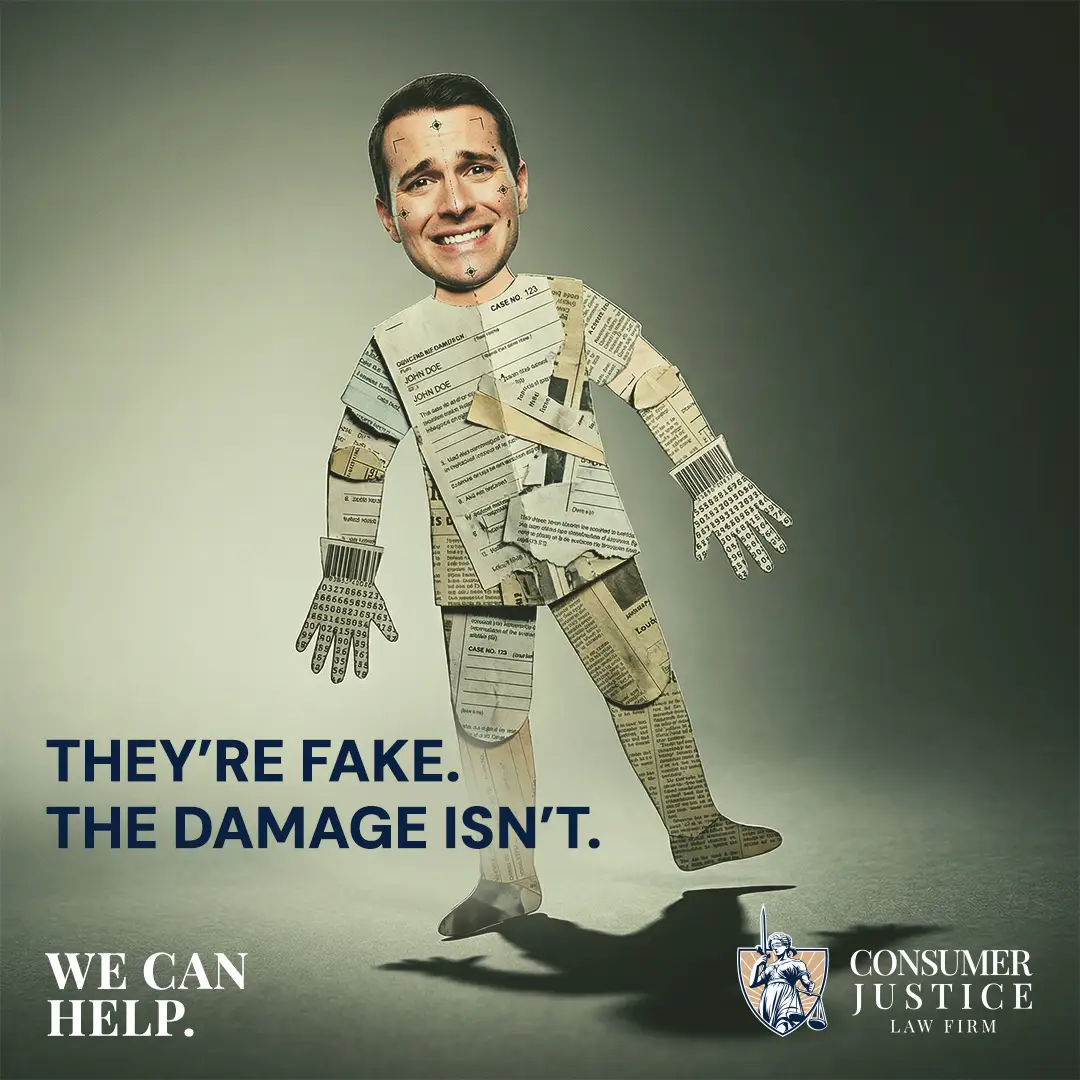
The synthetic identity theft definition varies depending on the source, but essentially, synthetic identity theft happens when criminals create a brand-new “person” by combining real information (usually a Social Security number) with fake information (name, address, date of birth).
The result? A person who doesn’t technically exist, but whose credit file absolutely does.
Unlike traditional identity theft, synthetic identity fraud doesn’t always hit the victim right away. In fact, many identity theft victims don’t realize they’ve been affected until they apply for a mortgage, a car loan, or a credit card and are met with confusion, denial, or a credit score that looks like it fell down a flight of stairs.
One of the most commonly stolen pieces of real data is a Social Security number, which is why understanding the steps to protect Social Security number from theft is critical. Children and seniors are especially vulnerable, making it essential to protect children’s Social Security numbers and protect elderly from identity theft long before a problem shows up.
How Does Synthetic Identity Theft Work?
Here’s where synthetic identity theft gets particularly annoying. Criminals don’t rush. They play the long game.
A thief starts by pairing a real Social Security number with fake personal information, creating a synthetic identity. This synthetic identity is then used to apply for small lines of credit. Initially, lenders may deny the applications, but even these denials still create a credit file. Over time, the fraudster builds trust, increases credit limits, and eventually disappears, leaving the debt behind.
Eventually, the real person whose Social Security number was used finds themselves dealing with credit report errors, unexplained debt, and identity theft affecting mortgage loans, and other forms of credit.
And because synthetic identity theft doesn’t involve a traditional one-to-one identity takeover, credit bureaus may take longer to investigate and resolve disputes. This delay is often when identity theft legal help becomes especially valuable, helping victims navigate complex credit challenges and push for timely corrections.
Examples of Synthetic Identity Theft
To make this less abstract (and slightly more alarming), here are several real-world examples of synthetic identity theft in action – situations that routinely surprise people who thought identity theft was something that only happened to “other” people:
- A college student applies for her very first credit card and discovers that a decade-old credit file already exists in her name- complete with delinquent accounts and charge-offs on a credit card she never opened.
- A retiree is denied a mortgage refinance after lenders find unpaid debts linked to an address he has never lived at and creditors he has never heard of.
- A child’s Social Security number is quietly used for years to build a synthetic identity, only to be discovered when the child turns 18 and applies for student loans.
- A working professional is denied an auto loan after synthetic identity fraud causes unexplained credit report errors, including maxed-out credit cards and missed payments.
- Parents attempting to open a savings account for their minor child are told the child already has a credit profile – an early warning sign of synthetic identity theft that often goes unnoticed for years.
These situations often involve synthetic identity theft that remains undetected because no one is actively checking the credit file tied to the Social Security number. Early awareness and credit monitoring after identity theft, or ideally before it happens, can prevent years of financial damage and frustration.
How to Prevent Synthetic Identity Theft
Preventing synthetic identity theft isn’t about paranoia; It’s about preparation. And yes, there are practical steps you can take without wrapping your laptop in aluminum foil or hiding from your Wi-Fi router.
Here are some proven strategies that actually help:
- Use two-factor authentication (2FA) wherever possible and follow best practices for passwords and authentication, especially for financial and email accounts. By enabling 2FA through text, email, or an authenticator app, even if someone steals your password, they still need a second verification step to access your account.
- Rely on a password manager and strong passwords instead of recycling the same password across every account. Instead, a password manager can generate and securely store complex passwords for banking, shopping, and social media accounts so one compromised password doesn’t put everything at risk.
- Install malware protection and antivirus protection – consider using a VPN for security, particularly when accessing sensitive information on public Wi-Fi. For example, antivirus software can alert you to suspicious downloads, while a VPN encrypts your connection at coffee shops, airports, or hotels to reduce the risk of data theft.
- Place a credit freeze on your credit file. You can freeze your credit with Experian, Equifax, and TransUnion, which prevents criminals from opening new accounts tied to a synthetic identity without your consent. A credit freeze restricts access to your credit report entirely until you choose to lift it.
- Place a credit lock on your credit file. A credit lock allows you to quickly lock and unlock your credit through a mobile app or online portal, offering similar protection to a freeze but with more convenience if you plan to apply for new credit. This can help reduce risks like identity theft affecting loans or new credit applications opened in your name.
- Learn how to identify phishing emails and scams. Phishing emails and suspicious emails remain one of the most common ways criminals gather the real data used to create synthetic identity fraud profiles. For example, watch for urgent language, unfamiliar senders, unexpected attachments, or links that ask you to “verify” personal information.
Taken together, these steps dramatically reduce the risk of synthetic identity theft and make it far more difficult for criminals to quietly build fake identities using real information. Prevention doesn’t require perfection – just consistency.
What to Do if You Are a Victim of Synthetic Identity Theft
If you discover synthetic identity theft, take action quickly – but calmly. Panic doesn’t fix credit reports, but documentation does. The goal is to create a clear paper trail that proves you are a victim of synthetic identity fraud, not the person responsible for the damage.
Make a Report with the FTC
One of your first steps should be to formally report identity theft through the Federal Trade Commission at identitytheft.gov. Filing an FTC report creates an official record that lenders, credit bureaus, and courts often rely on when reviewing synthetic identity theft claims.
This documentation is essential when you later dispute credit report errors from identity theft or seek identity theft legal help.
File a Police Report
You should also report synthetic identity theft to police by filing a report with your local police department. While it may feel uncomfortable, a police report adds credibility and is frequently required during credit bureau disputes.
Be prepared with the documentation needed for an identity theft police report, including government-issued identification, copies of your credit reports, and evidence of fraudulent accounts.
Dispute Credit Report Errors
Once reports are filed, you must address the damage directly. This involves submitting Experian, Equifax, and TransUnion disputes and carefully documenting every credit report error tied to the synthetic identity.
Well-drafted dispute letters to credit bureaus are critical, and persistence is often required to hold credit bureaus accountable for reporting errors and identity theft affecting credit cards and other eligibility for lines of credit.
Work with an Identity Theft Lawyer
An identity theft lawyer can protect your rights, manage deadlines, and pursue reimbursement for identity theft damages when appropriate. Identity theft attorneys regularly represent identity theft victims dealing with synthetic identity theft, credit damage, and unresponsive credit bureaus.
Other Types of Identity Theft
While synthetic identity theft is one of the fastest-growing and hardest-to-detect forms of fraud, it’s far from the only way criminals misuse personal information. Understanding the broader landscape of identity theft helps put synthetic identity theft vs identity theft into perspective.
Traditional identity theft uses a real person’s stolen personal information to impersonate them, while synthetic identity theft combines real and fabricated details to create a brand-new, fictitious identity that isn’t tied to a single real person. Other types of identity theft include:
Financial Identity Theft
This is the classic version – criminals use stolen personal information to access credit cards, bank accounts, or loans. Unlike synthetic identity theft, the victim usually notices quickly when unauthorized charges appear.
Medical Identity Theft
Fraudsters use someone else’s identity to obtain medical care, prescriptions, or insurance benefits. Victims may discover the problem only after receiving bills, denied coverage, or inaccurate medical records.
Tax Identity Theft
Here, criminals file fraudulent tax returns using stolen Social Security numbers to claim refunds. Victims often learn about it when the IRS rejects their legitimate return.
Employment Identity Theft
Someone uses another person’s Social Security number to obtain employment. This can lead to tax issues, benefit conflicts, and unexplained income appearing on government records.
Criminal Identity Theft
In these cases, offenders provide someone else’s information when arrested. Victims may find warrants, fines, or criminal records tied to them, an especially serious and stressful form of identity misuse.
Elder Identity Theft
Elder identity theft targets older adults, often exploiting cognitive decline, social isolation, or unfamiliarity with technology. Scammers may steal personal or financial information through phone scams, phishing, or caregiver fraud, frequently causing significant financial loss and emotional distress.
Child Identity Theft
Child identity theft occurs when a minor’s personal information is stolen and used to open credit accounts, apply for benefits, or commit fraud. Because children do not typically monitor credit, this type of theft can go undetected for years and may only surface when the child becomes an adult.
Each of these differs from synthetic identity theft, which blends real and fake data to quietly build fraudulent credit profiles over time, often without immediate warning.
Identity Theft Awareness Week
The Federal Trade Commission highlighted a problem it sees year after year: identity theft remains one of the most reported consumer issues in the country. Because of this, the FTC and its partners observe Identity Theft Awareness Week, a national effort focused on education, prevention, and recovery.
As identity theft grows more complex- especially with the rise of synthetic identity theft- many victims don’t realize they’ve been affected until serious financial damage has already occurred. Awareness weeks like this exist for a reason: talking about identity theft, sharing reliable resources, and knowing where to turn for help can dramatically reduce long-term harm.
The FTC’s free events, webinars, and tools emphasize a simple truth: identity theft can affect anyone, at any age. And when it does, knowing your rights, how to prevent ID theft, and your recovery options makes all the difference.
Get Help with Identity Theft Recovery
Recovering from synthetic identity theft is rarely straightforward. For most victims, it becomes an exhausting process involving credit bureaus, lenders, debt collectors, government agencies, and systems that seem designed to test patience rather than deliver solutions.
Many people attempt to handle synthetic identity fraud on their own, only to find that fixing one error often leads to new disputes, repeated denials, or unexplained delays.
Consumer protection attorneys focus on helping identity theft victims navigate the full recovery process – not just the paperwork. Identity theft recovery isn’t about sending a single letter and hoping for the best. It requires understanding federal consumer protection laws, enforcing deadlines, and pushing back when companies fail to conduct proper investigations or correct inaccurate data.
It can involve enforcing rights under several federal laws, including:
- Fair Credit Reporting Act (FCRA)
- Fair Credit Billing Act (FCBA)
- Electronic Funds Transfer Act (EFTA)
- Fair Debt Collection Practices Act (FDCPA)
Legal guidance helps victims stay on top of critical timelines, submit effective disputes, or preserve their rights at every step. Though unresolved credit damage can continue to affect loans, housing, employment opportunities, and long-term financial stability, with experienced legal support, you don’t face that uphill climb alone.
GET JUSTICE! Fight for fixes & money
Here’s the truth: synthetic identity theft is exhausting. It’s unfair. And it often leaves good people cleaning up messes they didn’t make.
At Consumer Justice Law Firm, our experienced identity theft attorneys focus on legal help for identity theft and credit damage. We represent clients nationwide and fight for identity theft victims dealing with synthetic identity fraud, ruined credit, and unresponsive credit bureaus.
Our team includes attorneys for synthetic identity fraud victims and we help with the entire process. We prepare legal documents for identity theft cases, and pursue full remediation after identity theft. We work tirelessly to protect your future.
If you need identity theft legal help, call Consumer Justice Law Firm today. Because when synthetic identity theft uses fake people to harm real ones, real justice should follow.
FREE Consultations! You pay $0 upfront or out of pocket. We only get paid when we win. No Justice, No Fee.TM