
Denied a Seasonal Job Before the Holidays? A Background Check Error Could Be the Reason
You nailed the interview and were already mentally relying on the holiday paychecks. Then came the least festive surprise: rejection. Before blaming yourself, consider whether the background check report got you wrong. A stranger’s criminal record or imaginary employment gap can derail a qualified applicant. Let’s unpack what can go wrong on an employment background check and what you can do about it.
Can a Background Check Error Cost You a Seasonal Job?
Yes. A background check error can cause an employer to delay or deny employment, withdraw a conditional offer, or remove an applicant from consideration entirely. During holiday hiring seasons, employers often make decisions quickly, leaving little time to correct inaccurate criminal records, employment history information, driving records, or mixed-file errors. When a background check company or employer violates the Fair Credit Reporting Act (FCRA), affected workers have the right to dispute the information and may be able to seek compensation for resulting harm.
Key Takeaways
- Background check errors can cost applicants seasonal jobs at major employers such as Amazon, UPS, FedEx, Walmart, Target, Best Buy, USPS, and other holiday hiring companies.
- Common errors include mixed files, incorrect criminal records, inaccurate employment history, and reporting another person’s information.
- Seasonal hiring moves quickly, which means a reporting mistake can cause workers to miss onboarding dates or lose opportunities before an error is corrected.
- The Fair Credit Reporting Act (FCRA) gives job applicants important rights, including the right to receive certain notices and dispute inaccurate information.
- Employers that use third-party background screening companies generally must follow pre-adverse and adverse action requirements before making certain employment decisions.
- Employment background check companies are a type of consumer reporting agency, which means they’re legally obligated to use reasonable procedures to ensure maximum possible accuracy.
- Applicants who lose income because of unlawful background check errors have legal remedies under federal law.
Many Applicants Never Learn Why They Were Rejected
A quiet inbox reveals little. Sometimes a rejection comes with an explanation. Other times, the employer goes quiet right after the background check, leaving you to play detective with an empty inbox. Silence alone doesn’t prove a reporting error, but it’s worth asking questions.
When a hiring decision is based on a third-party consumer report (i.e., a background check report), employers generally must provide certain notices under federal law. These required notices can help you find the report that was used against you, give you a chance to review what it says, and enable you to spot (and correct) mistakes before they follow you to the next application.
Common Seasonal Hiring Background Check Errors and Their Impact
| Background Check Error | How It Happens | Potential Consequence |
|---|---|---|
| Mixed File Error | Another person’s records become attached to your report | Job denial despite being qualified |
| Incorrect Criminal Record | Wrong conviction, charge, or disposition reported | Employer believes applicant has a criminal history |
| Expunged or Sealed Record Appears | Old records remain in databases | Conditional offer withdrawn |
| Wrong Employment History | Incorrect dates, titles, or termination information | Employer questions reliability or qualifications |
| Incorrect Driving Record | Another person’s violations appear on report | Delivery and driving jobs denied |
| Identity Mismatch | Similar name or Social Security Number confusion | Applicant treated as a different individual |
| Incomplete Court Information | Dismissals or acquittals not reported accurately | Employer sees an incomplete picture |
| Failure to Update Corrected Information | CRA fails to maintain accurate records after dispute | Repeated job denials across multiple applications |
Federal Law Gives You Rights When Background Checks Contain Errors
The Fair Credit Reporting Act (FCRA) regulates employment screening reports, notices, disputes, and certain remedies.
A background check doesn’t get the final word just because it looks official. Under the FCRA, you generally have the right to review and dispute inaccurate or incomplete information in a report prepared by a consumer reporting agency.
Employers also have notice obligations when they use those reports to deny a job. If a screening company or employer violates the law and you suffer harm, you may be able to pursue a legal claim.
Holiday hiring may be temporary, but your rights aren’t. Even if the seasonal job opportunity has come and gone, if a reporting error played a role in your rejection, get a free legal consultation.
Why Background Checks Matter During Holiday Hiring
Holiday hiring background checks help employers assess applicants for short-term work, but speed increases the stakes when records are wrong.
Seasonal Employers Often Hire Quickly
Retailers and fulfillment operations may need employees ready for Black Friday, peak shipping weeks, or year-end customer demand. One missed onboarding date can mean fewer available shifts.
Retail, Warehouse, and Delivery Jobs Frequently Require Screening
Employers may review criminal, driving, identity, or employment records. Seasonal employment background checks vary by role; there is no universal checklist.
Additionally, retail, warehouse, and delivery companies often rely on background checks to screen seasonal workers, especially for positions involving customer interaction or handling merchandise.
Fast Hiring Decisions Can Magnify Reporting Errors
Holiday calendars don’t pause for clerical errors. During peak hiring seasons, employers need to fill positions and keep products moving. With less time to wait for corrections, an inaccurate background check can cost an otherwise qualified applicant a job before they have a chance to clear things up.
Major Seasonal Employers and How Background Checks Affect Holiday Hiring
Every year, some of the nation’s largest employers hire hundreds of thousands of seasonal workers to meet increased holiday demand. These positions often include retail associates, warehouse workers, package handlers, delivery drivers, customer service representatives, and fulfillment center employees.
Because these companies hire at scale and often rely on third-party screening providers, applicants can face significant harm when a background check report contains inaccurate information.
Major Seasonal Employers That Commonly Conduct Background Checks
| Employer | Typical Seasonal Positions | Screening May Include |
|---|---|---|
| Amazon | Fulfillment associates, warehouse workers, delivery support | Criminal history, identity verification, employment screening |
| UPS | Package handlers, driver helpers, warehouse staff | Criminal records, driving records for certain positions |
| FedEx | Package handlers, delivery support, warehouse workers | Criminal background checks and driving history for some roles |
| Walmart | Cashiers, stockers, personal shoppers, fulfillment staff | Criminal history and identity verification |
| Target | Sales associates, fulfillment team members, stockers | Criminal background screening |
| Best Buy | Sales associates, warehouse staff, customer service | Criminal history and employment verification |
| Dick’s Sporting Goods | Cashiers, sales associates, inventory staff | Criminal and employment screening |
| Michaels | Retail associates, replenishment teams | Criminal background checks |
| Kohl’s | Seasonal store associates and fulfillment workers | Criminal history screening |
| Macy’s | Sales associates and customer service representatives | Criminal and employment verification |
| Nordstrom | Retail and fulfillment employees | Criminal history screening |
| Burlington | Seasonal store associates | Background screening for hiring decisions |
| TJ Maxx / Marshalls / HomeGoods | Retail associates and stock teams | Criminal screening and identity verification |
| USPS | Seasonal clerk assistants, mail handlers, support staff | Criminal history, employment screening, and federal suitability reviews |
Why Seasonal Workers Face Unique Risks
Seasonal hiring is often compressed into a short period between October and December. Large employers may need workers onboarded before Black Friday, Cyber Monday, Christmas shipping deadlines, or year-end sales events.
As a result:
- Hiring decisions may occur within days of an application.
- Background screening companies process enormous volumes of reports.
- Applicants may lose opportunities before a dispute can be resolved.
- Employers often move to alternate candidates immediately.
For example, if Amazon, UPS, FedEx, Walmart, or Target fills a position before a background check dispute is completed, a worker may lose weeks of wages even after the report is corrected.
Third-Party Background Screening Companies Used in Employment Screening
Many large employers do not prepare their own reports. Instead, they may rely on a type of consumer reporting agency known as a background screening company, such as:
- First Advantage
- Sterling Check
- HireRight
- Checkr
- Accurate Background
- GIS
- DISA
- GoodHire
- Universal Background Screening
- IntelliCorp
- Employment Background Investigations (EBI)
When these companies provide employment screening reports, they may be subject to the Fair Credit Reporting Act’s accuracy, disclosure, and dispute requirements.
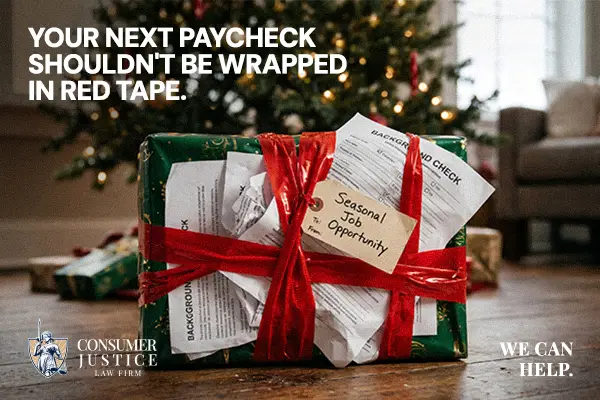
Can a Background Check Error Cost You a Seasonal Job?
Yes. A background check mistake can prevent employment, including costing you a seasonal job. Wrong information may lead to a rejection, delay, deactivation, termination, or withdrawn offer.
How Employers Use Background Checks
Employers compare findings with job requirements: driving records for delivery work, for example, or work history for customer service. The report must identify the right person.
Why Employers May Reject Applications Based on Incorrect Information
A misplaced conviction, mismatched identity, or false termination can suggest risks that aren’t yours. A job background check mistake can transform an ordinary application into an unexplained “no.”
The Financial Impact of Missing Holiday Income
Lost shifts can affect rent, groceries, and holiday plans. We suggest saving advertised wages, expected schedules, and offer messages to document possible losses.
How Do I Know If a Background Check Error Cost Me a Job?
While a rejection alone does not prove a reporting error caused you to lose the job, a combination of inaccurate information, adverse action notices, withdrawn offers, delayed onboarding, or sudden communication from the employer stopping after a background check can all be signs that a flawed report affected the hiring decision. For example, you received a conditional job offer, completed onboarding paperwork, or discussed a start date, only to be rejected, delayed, or ignored after the employer reviewed your background report.
Warning Signs a Background Check Error May Have Cost You a Job
Sudden hiring changes, screening notices, and incorrect records may raise concerns, but none alone proves a violation. That’s why keeping clear documentation is essential to supporting a potential claim.
The Employer Suddenly Stops Communicating
If messages stop after screening begins, ask whether a report affected your application. A search for “background check denied employment” cannot replace a clear answer from the employer.
You Receive an Adverse Action Notice
A notice naming a background screening company is a strong reason to request and review the report. Save any earlier pre-adverse-action notice and attachments too.
You Know the Report Contains Incorrect Information
An unfamiliar conviction or employer isn’t a harmless mistake if it changes how you’re evaluated. Background check report errors should be challenged with documents, not just repeated phone calls.
You Were Rejected Despite Meeting All Job Qualifications
Meeting all the qualifications doesn’t guarantee a job, but being rejected when you know you were a strong candidate can certainly raise questions. Compare the rejection date with screening emails and ask what influenced the decision.
Common Background Check Errors That Lead to Job Denials
Employment background check errors can look authoritative. But a fancy case-numbered header does not guarantee accuracy. Common background check errors can include everything from mixed files to incorrect employment history.
Mixed Files and Mistaken Identity
A screening company may combine data belonging to people with similar names. Check birth dates, addresses, middle names, and other identifiers rather than assuming the report’s label is correct.
Incorrect Criminal Records
Records may show the wrong offense, leave out a final disposition, or incorrectly attribute a conviction to you - when you have no criminal record at all! Obtain the court docket or certified disposition; an arrest and a conviction are not interchangeable.
Expunged or Dismissed Cases That Still Appear
Sealed, expunged, or dismissed cases may be reported inaccurately or used despite applicable restrictions. Whether a particular record can legally appear or influence hiring depends on federal, state, and local rules.
Reporting the Wrong Person’s Records
One wrong number or piece of identifying information can cause someone else’s history to end up on your background check. Flag unfamiliar addresses or cases and document the mismatch.
Inaccurate Employment History Information
Wrong employment dates, inaccurate reasons for termination, and other reporting errors can hurt job applicants. There’s a big difference between being fired after six months for alleged theft and working for the same company for over 10 years before it closed due to bankruptcy.
Inaccurate employment records can paint a misleading picture of an applicant’s work history and cost them a job opportunity. Document pre-employment background check errors with pay stubs or employer letters.
Seasonal Jobs Most Commonly Affected by Background Check Errors
Retail, warehouse, delivery, gig, and temporary jobs can all be affected; screening requirements differ.
Retail Positions
Cashiers, stock associates, and sales workers may face screening during holiday recruitment. Retail job background check errors can delay onboarding even when stores need extra hands immediately.
Warehouse and Fulfillment Jobs
Peak-season packing and sorting positions often have tight start dates. Warehouse job background check errors can cost a worker an entire week of shifts, not just an awkward email.
Delivery Driver Opportunities
Delivery employers may review license status and motor vehicle records. Delivery driver background check errors - such as someone else’s violation - can create a serious obstacle for qualified drivers.
Gig Economy and App-Based Work
Delivery and shopping apps also use screening in some circumstances. If a consumer report leads to deactivation or rejection, FCRA protections may apply depending on the relationship and how the report was used.
Customer Service and Temporary Employment
Background checks aren’t limited to retail and warehouse jobs. Other seasonal and temporary positions that may require screening include:
- Call center representatives
- Customer service associates
- Temporary administrative assistants
- Seasonal receptionists
- Data entry clerks
- Event and hospitality staff
- Temporary staffing agency workers
Depending on the position, employers may review criminal records, employment history, or other relevant qualifications.
What to Do If You Were Denied a Job Because of an Employment Background Check Report
Get the report, identify mistakes, dispute them promptly, and preserve evidence while hiring details are available.
Request a Copy of the Report
The notice should be an adverse action document that lists the screening agency that prepared the report for the employer. You typically have 60 days from receiving the notice to obtain another free copy of your background check report. The CFPB explains employment screening rights.
Review the Information Carefully
Look beyond the headline result. Compare names, case outcomes, dates, job titles, and addresses. An inaccurate background check report may contain several separate problems needing individual corrections.
Dispute Any Errors Immediately
Prepare and submit a dispute for employment background check errors. At Consumer Justice Law Firm, we recommend a detailed written dispute sent by certified mail, with copies of proof, because delivery records help establish what the screening company received and when, and prevent you from waiving any legal rights by agreeing to the terms required to use online dispute platforms. Keep originals; notify the employer that you’re disputing the report.
Keep Records of All Communications
Save the job posting, offer, shift expectations, notices, report, mailing receipt, dispute confirmation, and replies. Dates matter when jobs disappear faster than discounted wrapping paper.
Your Rights Under the Fair Credit Reporting Act (FCRA)
The FCRA protects seasonal job applicants by requiring reporting companies to use accuracy and employers to send notices, and by ensuring consumers have the right to dispute and seek remedies for certain violations.
The Right to Accurate Background Check Reports
For a consumer reporting agency background check, the screening company must follow reasonable procedures to assure maximum possible accuracy. That standard does not promise perfection, but sloppy matching is not excused by automation.
The Right to Receive Certain Notices
Before making a final employment decision based on a third-party background check, employers generally must give applicants a copy of the report and information explaining their rights under the FCRA. Afterward, it must provide an adverse action notice identifying the screening company and explaining relevant rights.
The Right to Dispute Inaccurate Information
Under 15 U.S.C. § 1681i, reporting agencies generally must reasonably reinvestigate disputes within 30 days, sometimes extended to 45. They must consider relevant information you submit and correct or delete information that cannot be verified as required by law.
The Right to Seek Compensation for Violations
Depending on the violation and proof, consumers may seek actual damages, and certain willful violations may support statutory or punitive damages. Compensation is not automatic.
Can You Sue for a Background Check Error?
Yes, you can sue for a screening error - if the FCRA was violated and the facts support a lawsuit. Rejection alone is not enough.
When a Consumer Reporting Agency May Be Liable
A screening company may face liability for failing to produce an accurate report in the first place, causing you harm, and failing to adequately investigate disputes by ignoring certified court records, repeatedly mixing identities, retaining clearly false information, or reporting the same errors repeatedly.
When an Employer May Violate the FCRA
An employer may violate the FCRA by obtaining a covered report without your required authorization or skipping required notices.
Timing matters: Before an employer officially rejects an applicant because of a background check, they generally must provide a copy of the report along with information explaining the applicant’s rights under the FCRA.
Employers may also violate separate employment discrimination laws by unfairly using background checks against applicants based on race, sex, disability, age, or other legally protected characteristics.
Potential Damages Available Under Federal Law
Under 15 U.S.C. § 1681n and § 1681o, remedies can include lost income, other actual harm, statutory damages for certain willful violations, punitive damages where authorized, and attorney’s fees in successful cases. Outcomes depend on the claim.
How Consumer Justice Helps Workers Harmed by Background Check Errors
Consumer Justice Law Firm examines inaccurate reports, mishandled disputes, and lost job opportunities - not just generic support tickets.
Employment Background Check Claims
If you failed a background check because a report confused you with someone else, we can evaluate the records, employment decision, and available evidence for potential claims.
FCRA Violations
Our FCRA lawyers examine the evidence to identify FCRA violations, including determining whether screening companies used reasonable procedures, reviewed disputes properly, and corrected inaccurate records, and whether employers complied with applicable notice rules.
Recovering Compensation After a Wrongful Job Denial
If a report caused lost holiday wages or other harm, contact Consumer Justice Law Firm to discuss whether the facts support legal action. You were qualified for that seasonal opportunity; your records should not sabotage it.
Related Questions About Seasonal Job Background Checks
Why would a background check prevent me from getting hired?
Employers often use background checks to evaluate whether applicants meet the requirements of a position. A report may influence hiring decisions if it contains negative criminal history information, driving-related issues, employment verification problems, or other information the employer considers relevant. Unfortunately, background checks are not always accurate. If a report mistakenly attributes someone else’s record to you, misstates your employment history, or contains other errors, an employer may reject your application based on incorrect information.
Can a background check delay my start date?
Yes. Even if an employer intends to hire you, unresolved issues in a background check can delay onboarding and your start date. Seasonal employers often work under tight hiring deadlines, and some companies will postpone training, scheduling, or final hiring decisions until screening is complete. During busy holiday hiring periods, even a short delay can result in missed shifts or lost opportunities.
How long does a seasonal employment background check take?
Many seasonal employment background checks are completed within a few days, but timing can vary depending on the employer, the screening company, the position, and whether records require additional review. Delays may occur when courts, previous employers, or government agencies take longer to respond. If inaccurate information appears on a report and a dispute is filed, the reinvestigation process may take significantly longer.
Can a job offer be withdrawn after a background check?
Yes. Employers may withdraw a conditional job offer after reviewing a background check. However, when an employer relies on a third-party consumer report, federal law generally requires certain notices before taking final adverse action. If a report contains inaccurate information, applicants may have the opportunity to review and dispute the errors before a final hiring decision is made.
What if someone else’s criminal record appears on my report?
If a background check includes another person’s criminal record, you should request a copy of the report, gather documents showing the information is incorrect, and dispute the error with the consumer reporting agency that prepared the report. Mixed-file errors and mistaken identity issues can occur when screening companies improperly match records to an applicant. Correcting the error quickly may help prevent it from affecting future employment opportunities.
Can I recover lost wages if a background check error costs me a job?
Yes. If a consumer reporting agency or employer violated the Fair Credit Reporting Act (FCRA) and a background check error caused you to lose income or suffer other damages, you may have legal remedies. The availability of compensation depends on the facts of the case, the nature of the violation, and the evidence connecting the inaccurate report to the lost job opportunity. Preserving hiring documents, notices, wage information, and dispute records can be important if you later pursue a claim.
Frequently Asked Questions
Yes. Inaccurate screening information can contribute to a rejection or delay, especially when jobs fill quickly.
Get the report, identify false information, file a documented dispute, and preserve messages from the employer.
Use the reporting company’s contact details in the adverse action notice and request your report directly. If you don’t receive an adverse action notice, ask the employer for a copy of the report or for the name of the background check company that was used.
Mixed identities, incorrect court outcomes, unfamiliar convictions, and inaccurate employment dates are common examples.
A federal dispute reinvestigation generally takes up to 30 days, sometimes 45. Unfortunately, correction may not restore a filled job.
It’s notice that an employer took unfavorable action based partly or entirely on a consumer report, with information about the reporting company and your rights.
Yes. An employer may reject an applicant in good faith based on incorrect information found in a background check. However, employers must follow applicable notice requirements, and reporting errors may raise legal concerns.
Yes. While not every situation supports a lawsuit, the law does allow you to sue when a background check error causes you harm. Consumer Justice Law Firm can review the report, dispute history, notices, and documented harm to assess your options.
Many Amazon seasonal positions involve background screening. The exact process can vary by role, location, and hiring program.
Yes. If inaccurate information appears on a background report, it can affect hiring decisions unless the error is identified and corrected.
Applicants whose background check reports contain inaccurate negative information can face denials, delays, deactivations, and financial and other harm. You can request a copy of the report, review the information, dispute inaccuracies, and preserve any notices related to the hiring decision.
Yes. Incorrect motor vehicle records can affect opportunities involving delivery driving or transportation-related responsibilities.
Large employers often use consumer reporting agencies such as First Advantage, Sterling, HireRight, Checkr, Accurate Background, GIS, and other screening providers.
If you were denied a seasonal job due to an inaccurate background check, or your disputes were ignored or mishandled, get a FREE consultation. You pay $0 out of pocket. We only get paid when we win. No Justice, No Fee™